
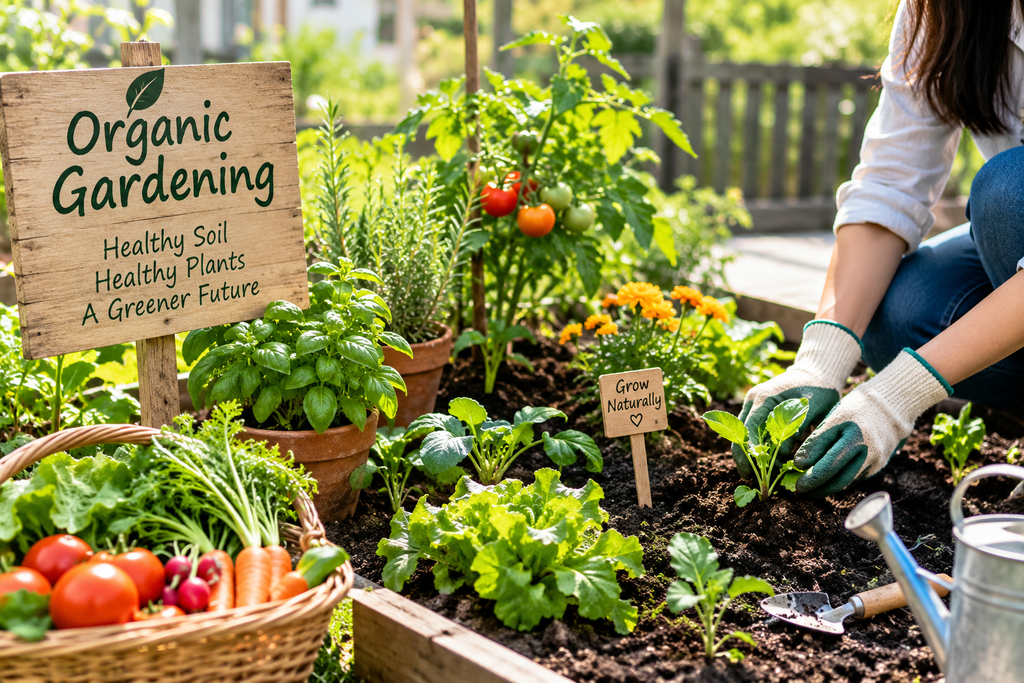
Organic gardening is a natural way of growing vegetables, fruits, herbs, and flowers while focusing on healthy soil and responsible gardening practices.
Instead of depending heavily on synthetic fertilizers and pesticides, organic gardening uses methods such as composting, organic matter, natural pest control, mulching, and plant diversity.
Why Is Organic Gardening Important?
Organic gardening focuses on the health of the entire garden, not just the plants. Healthy soil can provide a better environment for plants and beneficial organisms.
It can also help gardeners:
- Improve soil health
- Recycle suitable kitchen and garden waste
- Encourage biodiversity
- Reduce dependence on synthetic garden products
- Grow fresh herbs and vegetables at home
How Does Organic Gardening Work?
The foundation of organic gardening is healthy soil. Gardeners can improve soil by adding suitable compost and organic matter.
Plants are then grown according to their needs for sunlight, water, nutrients, and space. Garden pests can be managed using appropriate natural methods, such as physical barriers, hand removal, and encouraging beneficial insects.
What Can You Grow in an Organic Garden?
You can grow many plants organically, including:
Vegetables: Tomatoes, spinach, carrots, radishes, beans, and chilies.
Herbs: Mint, coriander, basil, tulsi, and lemongrass.
Fruits: Strawberries, lemons, guava, papaya, and other suitable fruit plants.
The best plants depend on your local climate, available space, and growing season.
Can Beginners Start an Organic Garden?
Absolutely. You do not need a large backyard. A balcony, terrace, or a few containers can be enough to get started.
Begin with two or three easy-to-grow plants. Give them suitable soil, sunlight, water, and regular care. As you gain experience, you can gradually expand your garden.
Simple Tips for Organic Gardening
- Start with healthy soil.
- Add suitable compost and organic matter.
- Choose plants suitable for your climate.
- Water according to each plant’s needs.
- Check plants regularly for pests and diseases.
- Use natural pest-management methods where appropriate.
- Keep learning and improving your garden.
Final Thoughts
Organic gardening is a simple way to grow plants while caring for soil and the surrounding environment. You do not need expensive equipment or a large space to begin.
Start small, care for your soil, and let your garden grow naturally.