
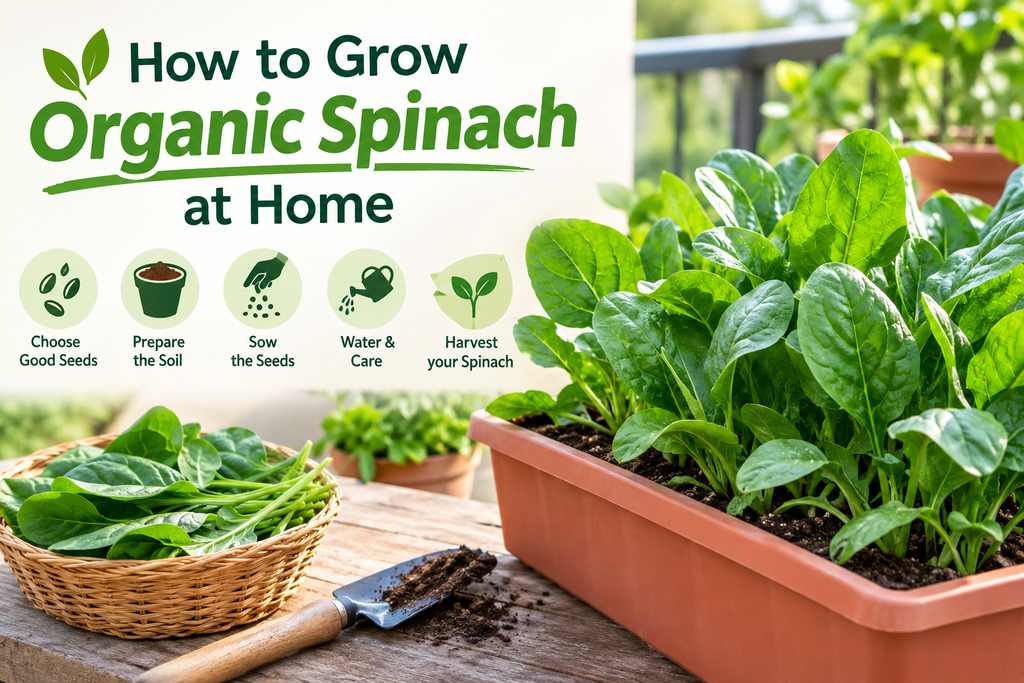
Spinach is one of the easiest leafy vegetables to grow in an organic garden. It grows quickly, needs limited space, and can be grown in a backyard, balcony, terrace, or container. With healthy soil, enough sunlight, regular watering, and natural fertilizer, you can enjoy fresh spinach at home.
What Is Spinach?
Spinach is a leafy green vegetable that belongs to the Amaranthaceae family. Its scientific name is Spinacia oleracea. It is grown mainly for its tender green leaves and is commonly used in salads, soups, curries, and many other dishes.
Spinach is a cool-season crop and generally grows best in mild and cooler weather.
Biological Classification of Spinach
Spinach is a flowering plant belonging to the family Amaranthaceae. Its scientific name is Spinacia oleracea.
| Classification | Details |
|---|---|
| Kingdom | Plantae |
| Clade | Angiosperms |
| Clade | Eudicots |
| Order | Caryophyllales |
| Family | Amaranthaceae |
| Genus | Spinacia |
| Species | Spinacia oleracea |
Scientific Name
The scientific name of spinach is Spinacia oleracea.
Spinach belongs to the Amaranthaceae family, which also includes plants such as beetroot, Swiss chard, and amaranth.
Important Characteristics of Spinach
Spinach is a fast-growing leafy vegetable with soft green leaves. Some important characteristics include:
- It is an annual herbaceous plant.
- It grows well during cool weather.
- It can be grown directly from seeds.
- It grows well in garden beds and containers.
- Young leaves can be harvested for eating.
- It prefers fertile and well-draining soil.
Choose the Right Location
Choose a place where your spinach plants can receive about 4–6 hours of sunlight each day. Spinach can tolerate some partial shade, especially during warmer weather.
If you are growing spinach in a container, place it where it can receive good morning sunlight and has proper air circulation.
Prepare Healthy Organic Soil
Good soil is important for growing healthy spinach. Use loose, fertile, and well-draining soil.
You can prepare organic soil by mixing:
- Garden soil
- Well-rotted compost
- Organic manure
- Cocopeat to improve soil structure and moisture retention
Avoid using fresh manure because it can damage young plants.
Choose Good Spinach Seeds
Choose fresh, good-quality spinach seeds from a reliable source. Select varieties that are suitable for your local climate.
For home gardening, choose a variety that grows well in containers if you have limited space.
How to Plant Spinach Seeds
Spinach is usually grown directly from seeds.
Make shallow rows in the soil and place the seeds about 1–2 cm deep. Leave enough space between the seeds so the plants have room to grow.
Cover the seeds lightly with soil and water gently. Keep the soil moist but avoid making it waterlogged.
Depending on temperature and growing conditions, spinach seeds can start germinating within several days to around two weeks.
Watering Spinach Plants
Spinach needs regular moisture for healthy leaf growth. Check the soil regularly and water when the top layer begins to feel dry.
Water gently around the base of the plants. Avoid excessive watering because continuously wet soil can cause root problems.
Use Organic Fertilizer
Spinach grows well in nutrient-rich soil. You can feed your plants with natural fertilizers such as:
- Homemade compost
- Well-rotted organic manure
- Vermicompost
- Compost tea
Apply organic fertilizer in small amounts rather than adding too much at once.
Protect Spinach Naturally
Spinach can sometimes be affected by common garden pests such as aphids, caterpillars, and leaf-eating insects.
To protect your plants naturally:
- Remove badly damaged leaves.
- Check the underside of leaves regularly.
- Keep the garden clean.
- Encourage beneficial insects.
- Use a suitable natural pest-control method when necessary.
Good air circulation and healthy soil can also help reduce plant problems.
When to Harvest Spinach
You can start harvesting spinach when the leaves become large enough to eat. Pick the outer leaves first and allow the smaller inner leaves to continue growing.
Regular harvesting can encourage the plant to produce more leaves.
For the best freshness, harvest spinach in the morning and use it soon after picking.
Can You Grow Spinach in Pots?
Yes, spinach grows very well in containers. Choose a pot that is at least 15–20 cm deep and has drainage holes at the bottom.
Fill it with fertile organic soil and sow the seeds directly. Keep the container in a place with suitable sunlight and water regularly.
Growing spinach in pots is a good option for balconies, terraces, and small gardens.
Benefits of Growing Organic Spinach at Home
Growing organic spinach at home has several benefits:
- You can harvest fresh leaves when needed.
- It is suitable for small gardens and containers.
- Spinach grows relatively quickly.
- You can choose natural fertilizers for plant care.
- It can provide a fresh supply of leafy vegetables.
- It is a good vegetable for beginner gardeners.
Common Mistakes to Avoid
When growing spinach at home, avoid these common mistakes:
- Overwatering the plants
- Using poorly drained soil
- Planting seeds too deeply
- Growing spinach in excessive heat
- Overcrowding the plants
- Using too much fertilizer
- Ignoring pests and damaged leaves
Simple and regular care can help your spinach plants grow better.
Final Thoughts
Growing organic spinach at home is simple and suitable for beginners. Start with good-quality seeds, prepare fertile organic soil, provide suitable sunlight, and maintain regular moisture.
With compost, proper watering, and natural plant care, you can grow fresh spinach in your garden, balcony, terrace, or containers.