
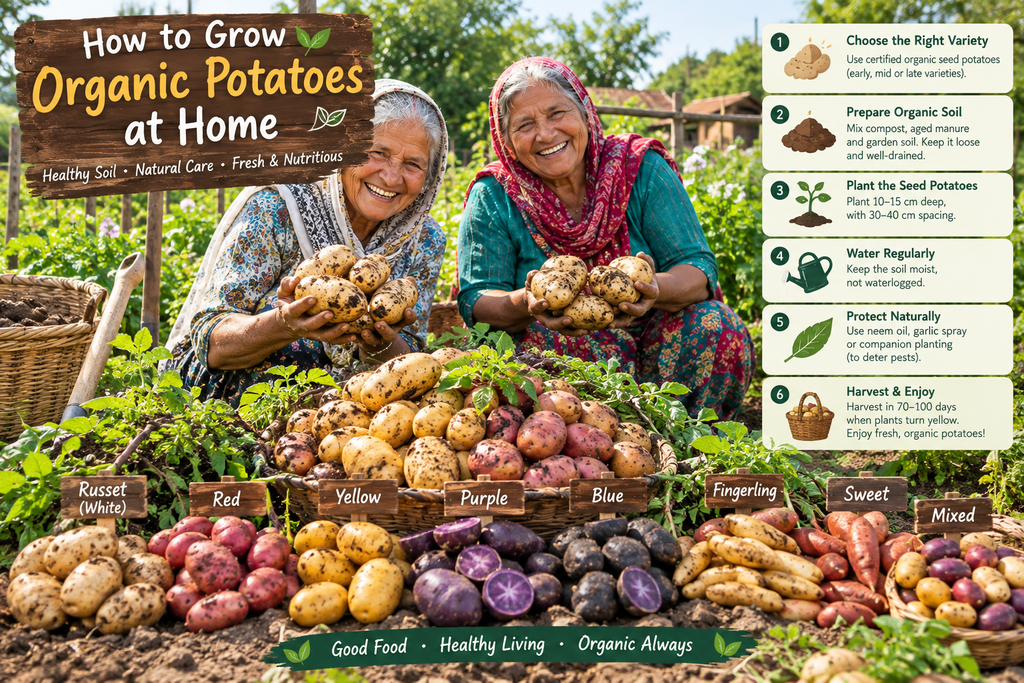
How to Grow Organic Potatoes at Home
Potatoes are one of the easiest vegetables to grow in an organic home garden. They can be grown in garden beds, grow bags, large containers, and even small spaces. With good-quality seed potatoes, loose soil, sunlight, regular watering, and natural fertilizer, you can grow fresh potatoes at home.
What Is a Potato?
Potato is an underground tuber that is commonly used as a vegetable. It belongs to the Solanaceae family, which also includes tomatoes, eggplants, and peppers.
The scientific name of potato is Solanum tuberosum.
Unlike carrots and radishes, the edible part of a potato is a modified underground stem called a tuber.
Biological Classification of Potato
The biological classification of potato is:
| Classification | Details |
|---|---|
| Kingdom | Plantae |
| Clade | Angiosperms |
| Clade | Eudicots |
| Order | Solanales |
| Family | Solanaceae |
| Genus | Solanum |
| Species | Solanum tuberosum |
Scientific Name
The scientific name of potato is Solanum tuberosum.
Potato belongs to the Solanaceae family, the same plant family as tomato, eggplant, and chili.
Important Characteristics of Potato
Potato is a herbaceous plant that produces underground tubers. Some important characteristics include:
- The edible tuber develops underground.
- Potatoes grow best in loose, well-draining soil.
- They are usually grown from seed potatoes or pieces of healthy tubers.
- The plant produces green leaves above the soil.
- Hilling or adding soil around the plants helps protect developing tubers from sunlight.
- Different varieties produce potatoes of different sizes, shapes, and skin colors.
Choose the Right Location
Choose a sunny location where potato plants can receive around 6–8 hours of sunlight each day.
Potatoes can be grown in a garden bed, raised bed, grow bag, or large container. Good drainage is important because waterlogged soil can damage the developing tubers.
Prepare Organic Soil
Potatoes grow best in loose, fertile, and well-draining soil. Hard or compact soil can make it difficult for tubers to develop properly.
Prepare the soil by mixing:
- Garden soil
- Mature compost
- Well-rotted organic manure
- Cocopeat or another material to improve soil structure
Avoid using fresh manure because it can harm the plants and may encourage irregular tuber growth.
Choose Good Seed Potatoes
Use healthy, disease-free seed potatoes from a reliable source.
Small potatoes can sometimes be planted whole. Larger seed potatoes can be cut into pieces, with each piece containing at least one healthy eye or bud. Allow freshly cut pieces to dry for a short time before planting.
Avoid planting potatoes that are rotten or visibly diseased.
How to Plant Potatoes
Plant the seed potatoes about 5–10 cm deep, depending on soil conditions and the planting method.
Place the pieces with the eyes facing upward and cover them lightly with soil.
Leave enough space between plants so the tubers have room to develop.
As the plants grow, gradually add more soil or compost around the base. This process is commonly called hilling.
Hilling Potatoes
Hilling is an important part of potato growing.
As the potato plant grows, add a layer of loose soil or compost around the lower part of the plant. This provides more space for tubers to develop and protects them from sunlight.
Never allow developing potatoes to remain exposed to strong light for long periods because they can turn green.
Watering Potato Plants
Potatoes need regular moisture, especially while the plants are growing and developing tubers.
Water when the soil begins to dry, but avoid keeping the soil constantly wet.
Deep and consistent watering is generally better than frequent shallow watering. Reduce watering as the plants mature and the leaves begin to die back.
Use Organic Fertilizer
Potatoes benefit from nutrient-rich soil. Mature compost and well-rotted organic manure can provide nutrients naturally.
You can also use suitable organic fertilizers according to the needs of your soil and plants.
Avoid excessive fertilizer because too much nitrogen can encourage leafy growth instead of healthy tuber development.
Protect Potatoes Naturally
Potato plants can be affected by pests such as aphids, caterpillars, and potato beetles, as well as fungal diseases.
To reduce problems naturally:
- Inspect leaves regularly.
- Remove badly damaged leaves.
- Keep weeds under control.
- Maintain good air circulation.
- Avoid excessive watering.
- Remove diseased plant material from the growing area.
- Practice crop rotation when possible.
Healthy soil and proper plant spacing can help reduce many common problems.
Growing Potatoes in Containers
Potatoes are well suited to containers and grow bags.
Choose a large container or grow bag with good drainage. Start with a layer of organic soil and plant the seed potatoes.
As the plants grow, gradually add more soil around the stems. Make sure the container receives enough sunlight and does not remain waterlogged.
Container growing is especially useful when garden space is limited.
When to Harvest Potatoes
Potatoes can be harvested at different stages depending on the variety and how you want to use them.
For mature potatoes, wait until the plant’s leaves turn yellow and begin to die back. Stop watering and allow the soil to become somewhat drier before harvesting.
Carefully loosen the soil and lift the tubers without damaging them.
For smaller or “new” potatoes, some can be harvested earlier while the plant is still green.
How to Store Organic Potatoes
After harvesting, allow the potatoes to dry and cure in a cool, dark, well-ventilated place.
Avoid washing potatoes immediately before long-term storage because excess moisture can encourage spoilage.
Store them away from direct sunlight. Do not eat potatoes that have become badly rotten or have extensive green areas.
Common Mistakes to Avoid
Avoid these common mistakes when growing potatoes:
- Using poor-quality seed potatoes
- Planting in compact or waterlogged soil
- Overwatering
- Planting too deeply without considering soil conditions
- Not adding soil around growing plants
- Exposing developing tubers to sunlight
- Using too much nitrogen fertilizer
- Ignoring pests and diseases
Benefits of Growing Organic Potatoes at Home
Growing potatoes organically at home has several benefits:
- You can enjoy freshly harvested potatoes.
- They can be grown in containers or grow bags.
- Potatoes are relatively easy for beginners.
- You can use natural compost and organic soil amendments.
- You can grow different potato varieties at home.
- Harvesting potatoes can be a rewarding gardening experience.
Final Thoughts
Growing organic potatoes at home is simple when you provide the right growing conditions. Start with healthy seed potatoes, prepare loose and fertile soil, provide enough sunlight, and maintain consistent moisture.
Remember to add soil around the plants as they grow and protect developing tubers from sunlight. With regular care and patience, you can enjoy fresh potatoes from your own garden, terrace, or container.