
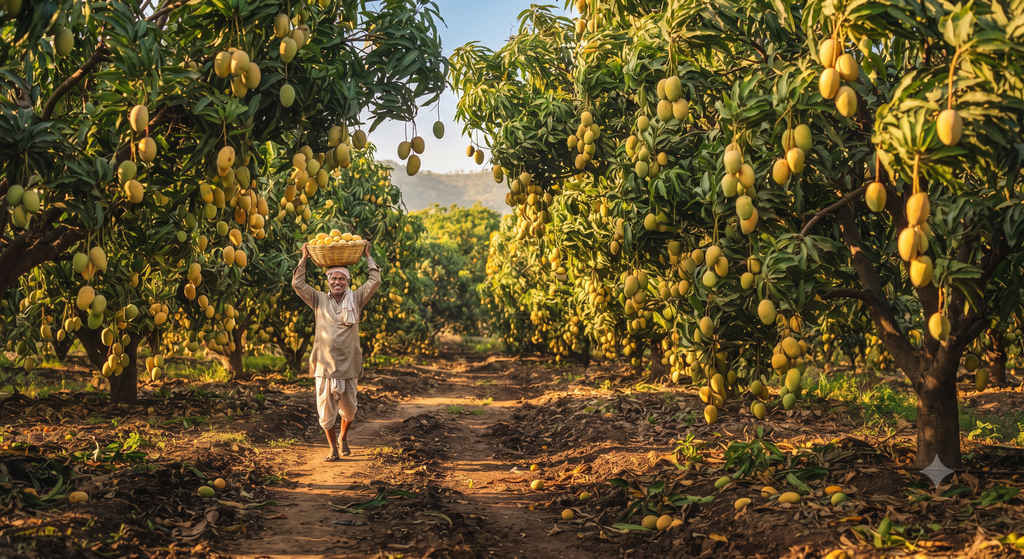
Mango is one of the most loved tropical fruits in the world. In India, mango is often called the “King of Fruits” because of its sweet taste, pleasant aroma, and many different varieties. Growing a mango plant at home can be a rewarding experience, especially when you eventually harvest fresh mangoes from your own tree.
Mango trees need warmth, sunlight, good soil, and enough space to grow. With proper organic care, you can grow a healthy mango plant in your home garden. Some compact varieties can also be grown in large containers.
What Is Mango?
Mango is a tropical fruit produced by the mango tree. The mango tree belongs to the Anacardiaceae family, which also includes cashew and pistachio.
The scientific name of mango is Mangifera indica.
Mango is an evergreen tree that can become large when grown in suitable conditions. It produces clusters of small flowers, followed by fruits that vary in size, shape, color, flavor, and aroma depending on the variety.
Biological Classification of Mango
The biological classification of mango is:
| Classification | Details |
|---|---|
| Kingdom | Plantae |
| Clade | Angiosperms |
| Clade | Eudicots |
| Order | Sapindales |
| Family | Anacardiaceae |
| Genus | Mangifera |
| Species | Mangifera indica |
Scientific Name
The scientific name of mango is Mangifera indica.
Mango belongs to the Anacardiaceae family. The species Mangifera indica includes many cultivated mango varieties.
Popular Mango Varieties
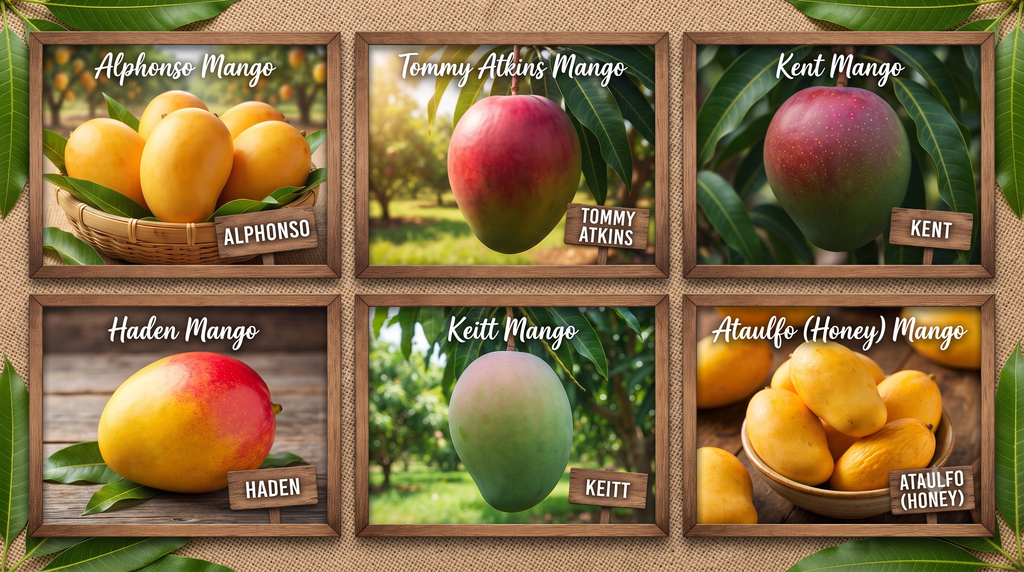
Mango has hundreds of cultivated varieties. Different varieties have different fruit sizes, colors, flavors, harvesting seasons, and growing characteristics.
1. Alphonso
Alphonso, also called Hapus, is one of India’s best-known mango varieties. It has a rich aroma, sweet taste, smooth texture, and attractive yellow-orange flesh.
2. Dashehari
Dashehari is a popular North Indian variety. It is known for its sweet, juicy flesh and pleasant aroma. It is commonly grown in Uttar Pradesh and other parts of North India.
3. Langra
Langra is another famous North Indian mango. The fruit usually remains green even when ripe and has juicy flesh with a distinctive sweet flavor.
4. Chausa
Chausa is a popular late-season mango variety. It is known for its very sweet and juicy flesh and is widely enjoyed during the summer mango season.
5. Kesar
Kesar mango is strongly associated with Gujarat. It has orange-colored flesh, a sweet flavor, and a pleasant aroma.
6. Banganapalli
Banganapalli is a popular South Indian variety. It produces large fruits with yellow skin and firm, sweet flesh.
7. Totapuri
Totapuri has a distinctive elongated shape with a pointed end. It is widely grown in southern India and is used both for eating fresh and for processing.
8. Amrapali
Amrapali is a hybrid mango variety known for its relatively compact growth. Because of its smaller size compared with many traditional mango trees, it can be considered for some home gardens.
9. Mallika
Mallika is a popular hybrid variety known for its sweet, aromatic fruit. It is grown in different parts of India.
10. Neelam
Neelam is a widely grown variety, particularly in southern India. It produces attractive fruits with sweet flesh and is also valued for its relatively regular fruiting.
Which Mango Variety Is Best for a Home Garden?
The best variety depends on your local climate, available space, and gardening goal.
If you have a large garden, you can grow vigorous varieties such as Dashehari, Langra, or Banganapalli. If you have limited space, a relatively compact variety such as Amrapali may be more suitable.
For reliable fruit production, it is generally better to buy a healthy grafted mango plant from a reputable nursery rather than growing a tree from an unknown seed.
Choose the Right Location
Mango trees need plenty of sunlight. Choose an open location that receives around 6–8 hours or more of direct sunlight each day.
Good sunlight supports healthy leaf growth, flowering, and fruit development.
Make sure there is enough space around the plant because many mango trees become large as they mature. Avoid planting near buildings, walls, underground pipes, or other large trees where the roots and branches may eventually cause problems.
The location should also have good drainage. Mango trees do not perform well in soil that remains waterlogged.
Prepare Healthy Organic Soil
Mango plants grow well in fertile and well-draining soil.
Before planting, improve the soil by mixing mature organic compost and well-rotted organic manure. Avoid using fresh manure because it can damage roots.
A good organic soil mixture can include:
- Garden soil
- Mature compost
- Well-rotted organic manure
- Organic matter for improving soil structure
The soil should be loose enough for the roots to spread easily.
Choose a Healthy Mango Plant
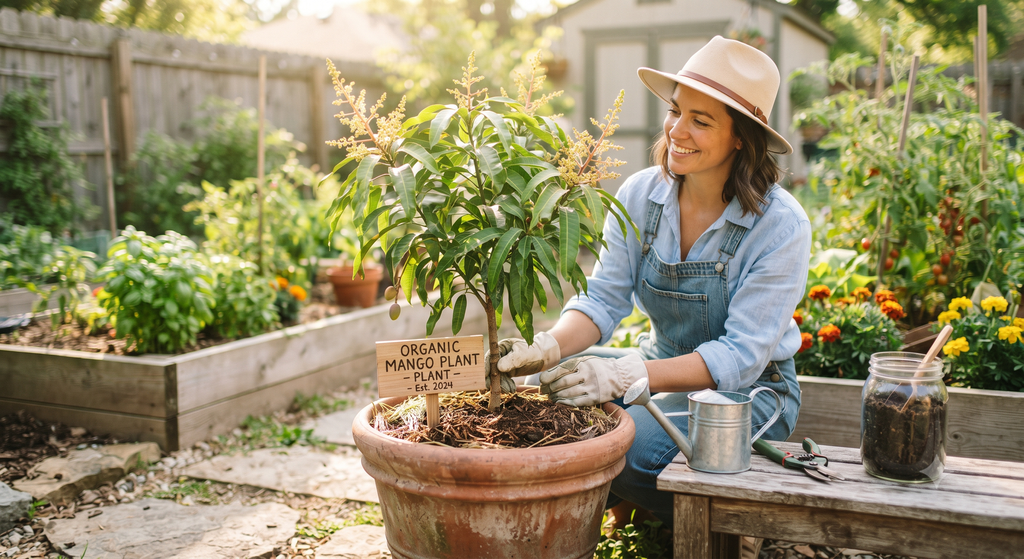
A healthy grafted plant is a good choice for home gardening.
When buying a mango plant, look for:
- Healthy green leaves
- A strong and straight stem
- Healthy roots
- No visible insect damage
- No signs of disease
A grafted mango plant usually fruits earlier than a seed-grown tree and allows you to choose a known variety.
Growing mango from a seed is possible, but seed-grown trees can take many years to produce fruit. Their fruit may also differ from the mango that produced the seed.
How to Plant a Mango Plant
Choose the planting location carefully before digging the hole.
Dig a hole that is wider than the plant’s root ball. Place the plant carefully in the hole and keep the top of the root ball close to the surrounding soil level.
Fill the hole with soil and gently press it around the roots. Water thoroughly after planting.
For a young tree exposed to strong winds, a support stake can help keep it upright.
Watering Mango Plants
Young mango plants need regular watering while their roots are developing.
Water deeply when the soil begins to dry, but do not keep the soil constantly wet. Overwatering can lead to root problems.
Once the tree becomes established, it can tolerate short dry periods better. However, adequate moisture is still important during active growth and fruit development.
Use Organic Fertilizer
Mango trees benefit from organic matter and balanced nutrition.
You can use:
- Mature compost
- Well-rotted organic manure
- Vermicompost
- Suitable organic fruit-tree fertilizers
Apply fertilizer according to the tree’s age and growing conditions. Avoid excessive fertilizer because too much nitrogen can encourage excessive leaf growth.
Adding organic mulch around the tree can also help retain soil moisture and reduce weed growth.
Natural Mango Plant Care
Regular observation is important for keeping a mango tree healthy.
Remove dead or damaged branches when necessary. Keep weeds away from the base of the tree and maintain good drainage.
Check leaves, flowers, and young fruits regularly for signs of pests.
Do not pile mulch directly against the trunk. Leave some space around the trunk to reduce excess moisture near the bark.
Common Mango Pests
Mango trees can be affected by pests such as:
- Mango hoppers
- Mealybugs
- Scale insects
- Fruit flies
- Aphids
Inspect the plant regularly and remove badly affected plant material where appropriate. Keeping the garden clean and encouraging beneficial insects can support natural pest management.
If a pest problem becomes serious, use a suitable organic pest-control method according to the product instructions and local recommendations.
Growing Mango in a Container
Some compact mango varieties can be grown in large containers.
Choose a strong container with good drainage and enough space for root development. Use fertile, well-draining organic soil.
Container-grown mango plants need regular attention to sunlight, watering, nutrition, and root space. They may remain smaller than trees planted in the ground, but they still require proper care.
When Does a Mango Tree Produce Fruit?
The time required for fruiting depends on the variety, climate, growing conditions, and whether the tree is grafted or seed-grown.
A healthy grafted mango tree generally produces fruit much earlier than a tree grown from seed.
Good sunlight, healthy soil, proper watering, and suitable nutrition can support flowering and fruit development.
When to Harvest Mangoes
Mangoes should be harvested when they have reached the appropriate maturity for their variety.
Signs of maturity can include changes in fruit size, shape, color, firmness, and aroma. These signs vary between varieties.
Harvest the fruit carefully to avoid bruising. Clean pruning shears or suitable harvesting tools can be used when needed.
Common Mistakes to Avoid
Avoid these mistakes when growing mango:
- Planting in waterlogged soil
- Giving the plant too little sunlight
- Overwatering
- Using fresh manure
- Applying too much fertilizer
- Growing a large variety in a very small container
- Ignoring pests and diseases
- Expecting a seed-grown tree to fruit quickly
- Planting without considering the tree’s mature size
Benefits of Growing Mango at Home
Growing mango organically at home has several benefits:
- You can enjoy fresh mangoes from your own garden.
- Mango trees provide attractive evergreen foliage.
- You can choose a variety suitable for your climate.
- Organic compost can be used to improve soil health.
- A healthy mango tree can produce fruit for many years.
- Growing your own fruit can be a rewarding gardening experience.
Final Thoughts
Growing an organic mango plant at home requires patience, sunlight, healthy soil, and regular care. Start with a healthy grafted plant of a suitable variety, especially if your goal is to get fruit sooner.
Choose a sunny location, provide good drainage, improve the soil with mature organic compost, and water according to the plant’s needs. Regularly inspect the tree for pests and maintain good garden hygiene.
With the right variety and proper care, a mango plant can become a beautiful and productive part of your home garden and provide delicious fruit for many years.