
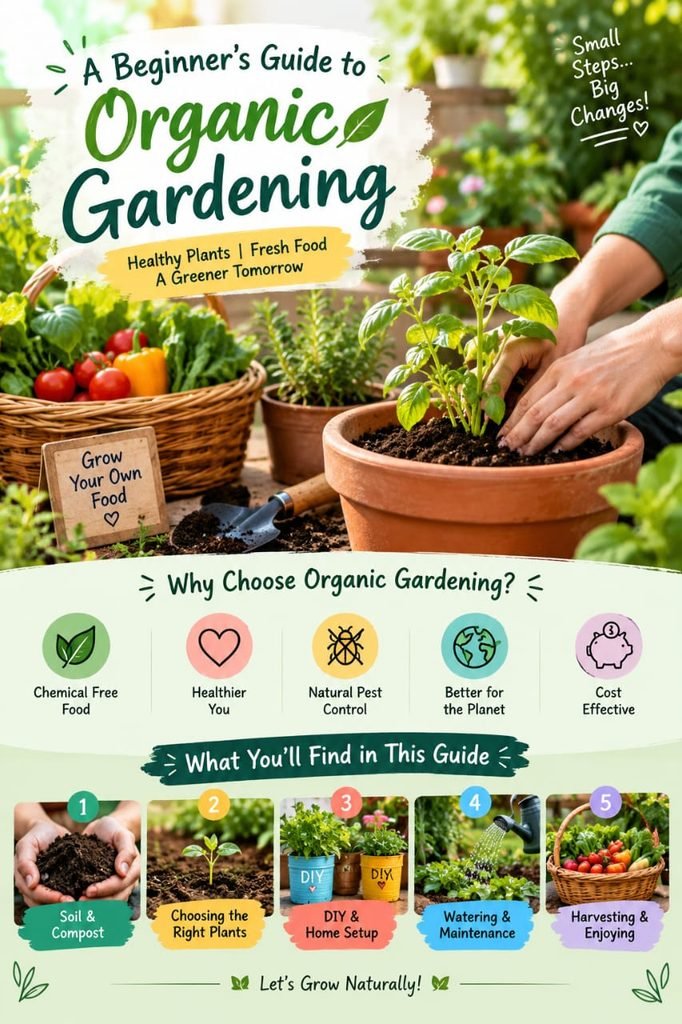
Organic gardening is a natural way to grow vegetables, fruits, herbs, and flowers without relying on synthetic fertilizers and chemical pesticides. It is easy to start and can be done in a backyard, balcony, terrace, or even in pots.
For beginners, organic gardening is a great way to enjoy fresh home-grown plants while taking better care of the soil and environment.
What Is Organic Gardening?
Organic gardening means growing plants using natural methods. It focuses on healthy soil, organic compost, natural fertilizers, and eco-friendly ways to manage pests.
The main goal is to create a healthy growing environment for plants without depending heavily on synthetic chemicals.
Choose the Right Place
Most plants need plenty of sunlight to grow well. Choose a location that receives around 6–8 hours of sunlight each day.
You can start an organic garden in:
- A backyard
- A balcony
- A terrace
- A small outdoor space
- Pots or containers
Make sure the area has good drainage and is easy to water.
Prepare Healthy Soil
Good soil is one of the most important parts of organic gardening. Healthy soil provides plants with nutrients and helps their roots grow properly.
Add organic compost or well-decomposed organic matter to improve the soil. Remove weeds, stones, and other unwanted materials before planting.
Choose Easy Plants
Beginners should start with plants that are relatively easy to grow. Some good choices include:
- Tomatoes
- Spinach
- Radishes
- Coriander
- Mint
- Green chilies
- Beans
Choose plants that are suitable for your local climate and available space.
Water Your Plants Properly
Plants need regular watering, but too much water can damage their roots. Check the soil before watering and keep it moist without making it constantly wet.
Watering in the morning can help plants stay hydrated during the day.
Use Organic Compost
Compost is an important part of organic gardening. It can be made from suitable kitchen and garden waste and helps add organic matter to the soil.
Regularly adding compost can improve soil quality and support healthy plant growth.
Manage Pests Naturally
Garden pests are common, but you do not always need strong chemicals to manage them. Keep your garden clean, remove damaged leaves, and check plants regularly for pests.
Healthy soil and healthy plants can also help reduce many common garden problems.
Start Small and Learn
You do not need to create a large garden immediately. Start with a few plants and learn how much sunlight, water, and care they need.
As you gain experience, you can add more plants and try new organic gardening methods.
Final Thoughts
Organic gardening is simple when you start with the basics. Choose a sunny location, prepare healthy soil, grow suitable plants, water carefully, and use natural compost. With regular care and patience, beginners can create a healthy and productive organic garden at home.
SEO Details
SEO Title: A Beginner’s Guide to Organic Gardening
Meta Description: Learn the basics of organic gardening, including soil preparation, plant selection, watering, compost, and natural pest control.
Focus Keyword: Organic Gardening for Beginners
Suggested Featured Image: A beginner planting vegetables in a small organic home garden with healthy soil, compost, pots, gardening tools, and fresh green plants.