
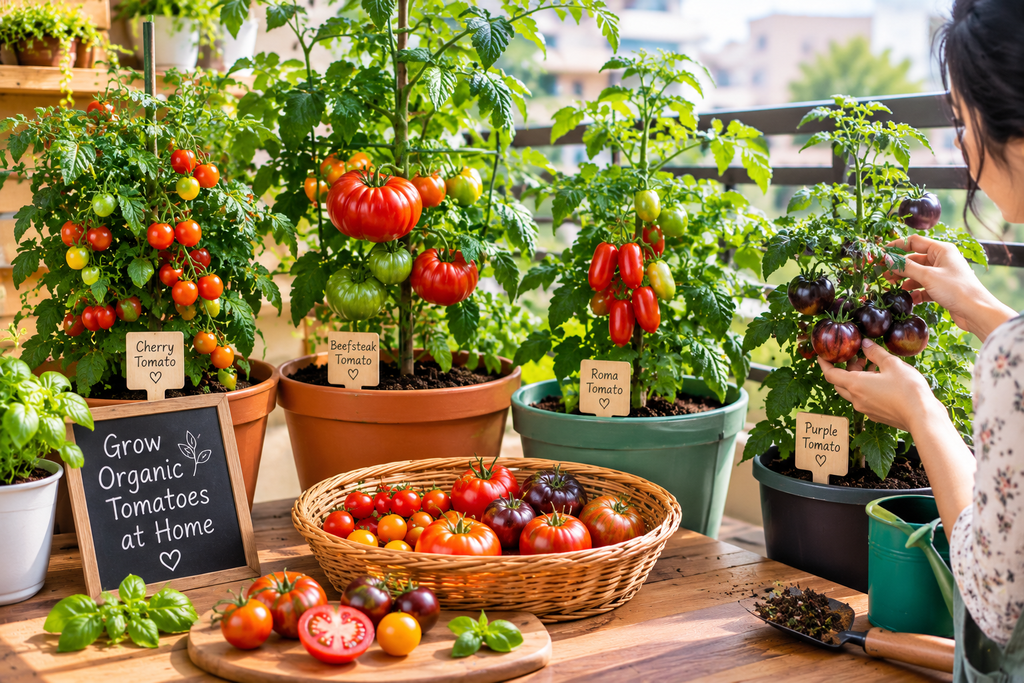
Tomato is one of the most popular vegetables grown in home gardens. It can be grown in a backyard, balcony, terrace, or large container. With good sunlight, healthy soil, organic compost, regular watering, and proper care, you can grow fresh tomatoes naturally at home.
Tomatoes are also a good choice for beginners because they are relatively easy to grow when their basic requirements are met.
What Is a Tomato?
Tomato is a flowering plant that produces edible fruits. It is widely grown around the world and is used in salads, curries, sauces, soups, and many other dishes.
Although tomato is commonly used as a vegetable, botanically its fruit develops from the flower and contains seeds.
Scientific name: Solanum lycopersicum
Biological Classification of Tomato
| Classification | Tomato |
|---|---|
| Kingdom | Plantae |
| Clade | Angiosperms |
| Clade | Eudicots |
| Order | Solanales |
| Family | Solanaceae |
| Genus | Solanum |
| Species | Solanum lycopersicum |
Tomato belongs to the Solanaceae family, also known as the nightshade family. Potato, eggplant, and chili are also members of this family.
Important Characteristics of Tomato
Tomato plants have several interesting characteristics:
- They are flowering plants.
- They produce fleshy fruits containing seeds.
- They generally grow best in warm conditions.
- They need plenty of sunlight.
- Different varieties produce fruits of different sizes, shapes, and colors.
- Tomato plants can be grown in gardens as well as containers.
- Some varieties need support as they grow taller.
Popular Tomato Types and Varieties
There are many types of tomatoes, and the best choice depends on your climate and available space.
Some commonly grown types include:
- Cherry tomatoes: Small, sweet fruits that are excellent for containers.
- Roma tomatoes: Firm fruits commonly used for cooking and sauces.
- Beefsteak tomatoes: Large fruits suitable for salads and sandwiches.
- Determinate tomatoes: Usually stay more compact and produce much of their crop within a shorter period.
- Indeterminate tomatoes: Continue growing and producing fruits for a longer period when conditions are suitable.
For a small balcony garden, compact or container-friendly varieties can be a practical choice.
Choose the Right Location
Tomatoes need plenty of sunlight. Choose a location that receives around 6–8 hours of direct sunlight each day.
A sunny garden, terrace, balcony, or patio can work well.
Good air circulation is also useful because crowded and poorly ventilated plants can have more disease problems.
Prepare Healthy Organic Soil
Tomatoes grow well in fertile, well-draining soil. Before planting, mix the soil with mature organic compost.
Good soil should:
- Drain excess water
- Hold enough moisture
- Contain organic matter
- Allow roots to grow easily
Avoid waterlogged soil because too much moisture around the roots can cause problems.
Planting Tomato Seeds or Seedlings
You can start tomatoes from seeds or buy healthy young seedlings.
If starting from seeds, sow them in a suitable seed-starting medium and provide enough light and moisture. Once seedlings become strong enough, they can be transplanted into a larger container or garden bed.
When transplanting, handle the roots gently and provide enough space for the plant to grow.
Choose the Right Container
Tomatoes can grow successfully in containers if the container is large enough.
Choose a container with:
- Good depth
- Good width
- Drainage holes
- Healthy potting soil
Cherry and compact tomato varieties are often easier to manage in smaller spaces.
Watering Tomato Plants
Tomatoes need regular moisture, especially during active growth and fruit development.
Check the soil before watering. Water when the soil begins to dry, but avoid keeping it constantly wet.
Water the soil near the base of the plant rather than frequently wetting the leaves. Consistent watering can also help reduce problems caused by large changes in soil moisture.
Provide Plant Support
Many tomato plants become heavy as they grow and produce fruit. A stake, trellis, or tomato cage can help support the plant.
Tie the plant gently to its support when necessary. Keeping the plant upright can improve air circulation and help keep fruits away from the soil.
Use Organic Compost
Organic compost is a useful source of organic matter for tomato plants. Add mature compost to the soil before planting and use additional compost when appropriate during the growing season.
Avoid using excessive fertilizer. Healthy soil and balanced plant nutrition are more important than simply adding more fertilizer.
Natural Pest and Disease Management
Check tomato plants regularly for insects, damaged leaves, and signs of disease.
Simple organic gardening practices include:
- Remove badly damaged leaves.
- Keep the growing area clean.
- Give plants enough space.
- Avoid overwatering.
- Encourage beneficial insects where appropriate.
- Remove severely affected plant material when necessary.
Good plant care and healthy soil can help reduce many common garden problems.
When to Harvest Tomatoes
Tomatoes are ready to harvest when they reach their mature size and develop the expected color of their variety.
Pick ripe tomatoes carefully by hand. You can also harvest some tomatoes slightly before full ripeness and allow them to finish ripening under suitable conditions.
Fresh home-grown tomatoes can be used in salads, curries, sauces, sandwiches, and many other recipes.
Benefits of Growing Tomatoes at Home
Growing tomatoes at home has several advantages:
- Fresh produce is easily available.
- You can choose natural gardening methods.
- It is suitable for gardens and containers.
- Gardening provides a practical way to learn about plants.
- Home-grown tomatoes can add variety to your kitchen garden.
Final Thoughts
Growing organic tomatoes at home can be simple and rewarding. Start with a suitable variety, provide plenty of sunlight, prepare healthy organic soil, water consistently, and support the plant as it grows.
With regular observation and natural gardening practices, beginners can enjoy fresh tomatoes from their own home garden.